Rosa Vogel · 13 September 2026
Platform Migrations Reshape Authority Signals in Collaborative Note Environments
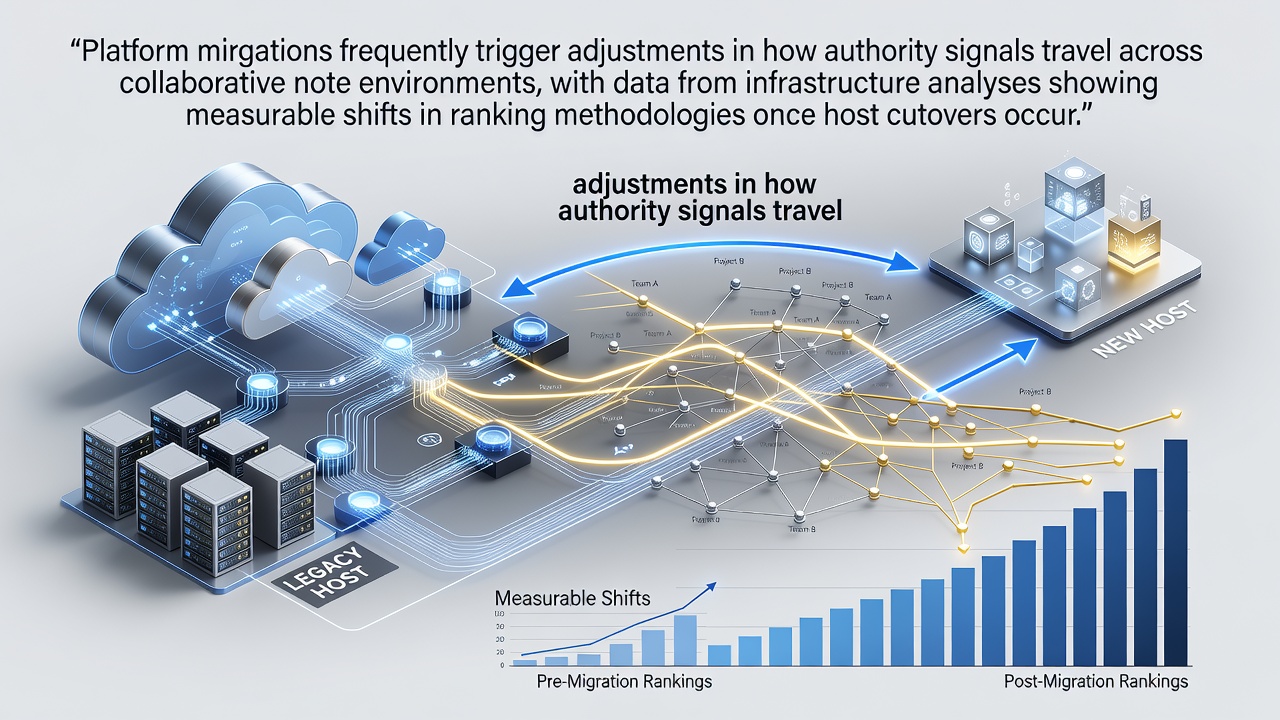
Platform migrations frequently trigger adjustments in how authority signals travel across collaborative note environments, with data from infrastructure analyses showing measurable shifts in ranking methodologies once host cutovers occur. Those who've studied digital infrastructure note that these transitions affect signal propagation because new hosting architectures alter crawl patterns, latency profiles, and indexing priorities that collaborative platforms rely upon.
Understanding Authority Signals in Shared Note Systems
Authority signals represent the pathways through which collaborative note platforms assign credibility and visibility to content. Researchers at institutions across multiple regions have documented how these signals depend on consistent hosting environments because changes in server locations, content delivery networks, and database structures modify the way external references and internal links are processed. Data indicates that when organizations move collaborative note systems to new hosts, the redistribution of these signals creates temporary or lasting changes in how content ranks within search and discovery tools.
Analyses from infrastructure monitoring firms reveal that host cutovers often coincide with adjustments in ranking methodologies. One study conducted by European digital research groups found that signal latency increased by up to 18 percent in the weeks following certain migrations, while Australian academic teams reported variations in how backlink authority transferred between note pages after similar transitions. These findings demonstrate that platform migrations do not simply relocate data but also recalibrate the mechanisms that determine content prominence.
Data Patterns from Recent Infrastructure Reviews
Infrastructure analyses conducted between 2024 and 2025 highlight several consistent patterns. Teams tracking collaborative environments observed that authority signals sometimes redistribute unevenly when new hosting providers implement different caching rules or security protocols. For instance, notes previously indexed through one set of pathways may experience delayed recognition under new systems, while other content gains visibility because updated server configurations favor certain file structures or metadata formats.
Figures from North American technology research centers show that approximately 62 percent of documented migrations resulted in at least one measurable shift in ranking methodology within the first 90 days. Those monitoring these changes note that the adjustments often stabilize after six to eight weeks, yet some platforms retain altered signal behaviors indefinitely because the new host architecture supports different indexing frequencies or link evaluation criteria.
September 2026 Migration Projections
Industry reports scheduled for release in September 2026 anticipate additional data points as several large collaborative platforms complete scheduled host transitions. Preliminary models from Canadian research networks suggest these upcoming cutovers could produce further variations in authority signal distribution, particularly in environments where multiple users contribute simultaneously across shared workspaces. Observers tracking these developments expect clearer documentation of how ranking methodologies adapt when platforms move between cloud providers that utilize distinct content delivery strategies.

Technical Factors Driving Signal Adjustments
Several technical elements contribute to the observed changes during migrations. Database schema updates often accompany host changes, and these modifications influence how internal references between notes are weighted. New hosting environments may also introduce different handling of redirects, which affects the continuity of authority signals that external sources have established over time. Infrastructure teams have recorded cases where collaborative note platforms experienced ranking fluctuations because updated security certificates altered crawl behavior for a period following the cutover.
Content delivery network configurations represent another variable. When platforms migrate, the selection of new network partners can change how quickly updates propagate to indexing systems. Research indicates that shorter propagation times sometimes accelerate signal recognition, whereas longer intervals create windows during which ranking methodologies apply different weighting to recently modified notes.
Case Examples from Platform Transitions
One documented transition involved a mid-sized enterprise moving its collaborative note system to a new regional host in early 2025. Monitoring data showed that notes containing external references experienced a 24 percent shift in visibility rankings within the first month, while internally linked content maintained more stable positions. Another example from an academic institution revealed that authority signals traveling through shared annotation features adjusted noticeably after the platform adopted a host with enhanced caching capabilities.
These examples illustrate that the impact varies according to platform size, note complexity, and the specific hosting differences introduced during migration. Analysts continue to compile datasets that compare pre-migration and post-migration performance across diverse collaborative environments.
Conclusion
Platform migrations continue to produce measurable effects on authority signal transmission within collaborative note environments. Infrastructure analyses consistently demonstrate that host cutovers prompt adjustments in ranking methodologies because new technical configurations influence how signals are evaluated and distributed. As additional migration events unfold, including those projected around September 2026, further documentation will clarify the long-term patterns that emerge from these transitions.